Data and integration audit
Agreed during scoping
Review of TOS, gate, IoT and AIS data, plus a prioritised list of use cases
Oberallmendstrasse 18, 6300 Zug Switzerland
Zaandijkerweg 8, 1521 AX Wormerveer, Netherlands
10 Midford Place, W1T 5AG, London, United Kingdom
Yigal Alon St 98, Tel Aviv, 6789141, Israel

For port and multimodal terminal operators who need ship, yard, rail and truck planned from one model, running on a real-time digital twin of the terminal. At AI Engineering by Grid Dynamics, we build AI planning and scheduling systems that sit on top of your existing terminal operating system (TOS). Discharge sequencing, yard slotting, equipment dispatch and landside handoffs all work from the same live picture of the terminal, so a change at the berth carries through to the yard, gate and rail plans instead of stopping at one planning desk.
See how it works

Terminals lose time and money when discharge, yard and landside plans are built separately and updated too slowly to keep pace with the quay. Each gap below turns into longer port stays, extra container moves or missed connections, and each one is harder to fix when the systems behind it don't share data.

When discharge plans don't adjust to berth changes or crane availability, vessels stay alongside longer. That means berth congestion and harder conversations with shipping lines about service levels.

Containers stacked without regard to retrieval time, destination or weight have to be dug out later. Every extra rehandle and ground move slows delivery to trucks and rail.

STS cranes, RTGs and yard trucks are rarely loaded evenly across a shift. Some sit idle while others queue, which wastes fuel, adds emissions and caps throughput.

Truck queues build when gate capacity isn't matched to yard readiness. Rail departures get missed when the containers they need are still buried in the stack.

Ship, yard and landside data usually live in separate systems. During disruption, planners rebuild plans by hand with only part of the picture, so decisions come late and are hard to test before they go live.
AI Engineering by Grid Dynamics builds five connected modules that share one digital twin of the terminal: real-time visibility, discharge and stowage sequencing, yard slotting, equipment and labour scheduling, and multimodal handoff coordination. Operators can start with one module and add the others on the same data foundation. Because every module reads from the same digital twin, one change flows through the whole plan. A berth delay updates the discharge sequence, which changes when containers reach the yard, which changes the slots they need and the equipment, rail and truck capacity that follow. Planners see these knock-on effects before they act, instead of finding them later at the gate or the rail siding.
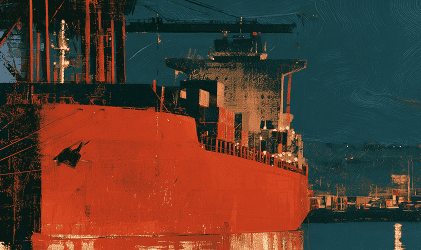
A digital twin for port operations: gives planners one live view of the whole terminal.
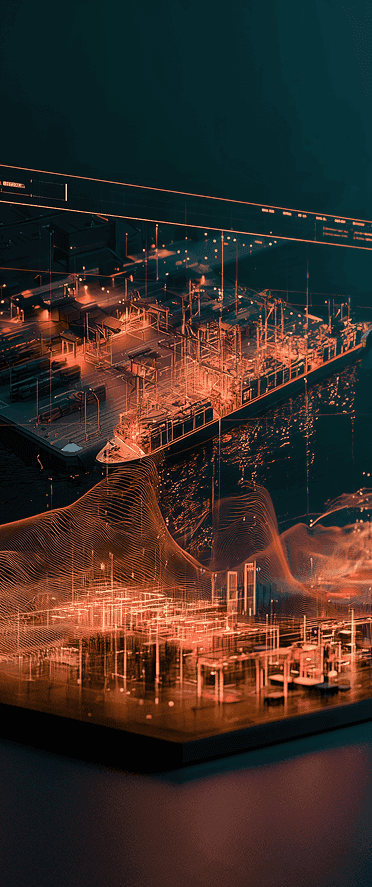
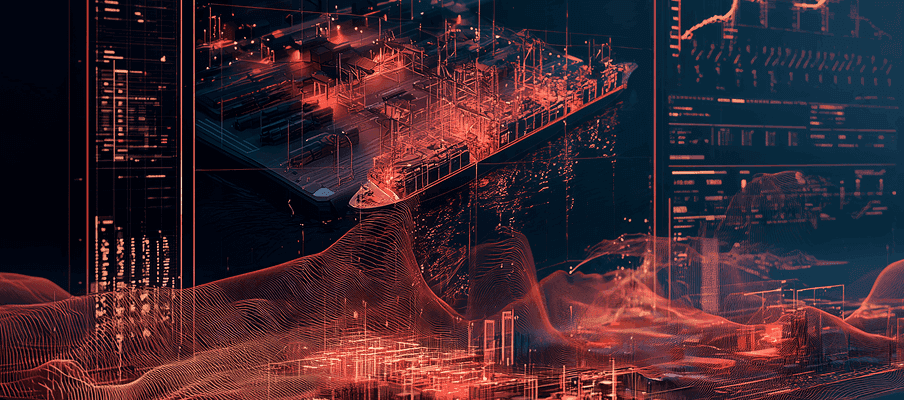
AI Engineering by Grid Dynamics combines simulation tools, direct integration with terminal systems and live operational data streams. Each group below has a specific job in the solution.
| Group | ||
|---|---|---|
| Group | What we use | Why it matters |
| Simulation and digital twin | ||
| Simulation and digital twin | NVIDIA Omniverse; proprietary Intra-Logistics Simulator accelerators | Builds a high-fidelity model of the terminal fast enough to fit a POC timeline |
| Terminal system integration | ||
| Terminal system integration | TOS platforms (Navis, Cosmos, Tideworks); Gate Operating Systems; truck appointment systems | Works with the systems you already run, so nothing has to be replaced |
| Operational data | ||
| Operational data | IoT sensor streams; AIS vessel tracking | Keeps the digital twin current with what is happening on the quay, in the yard and at sea |
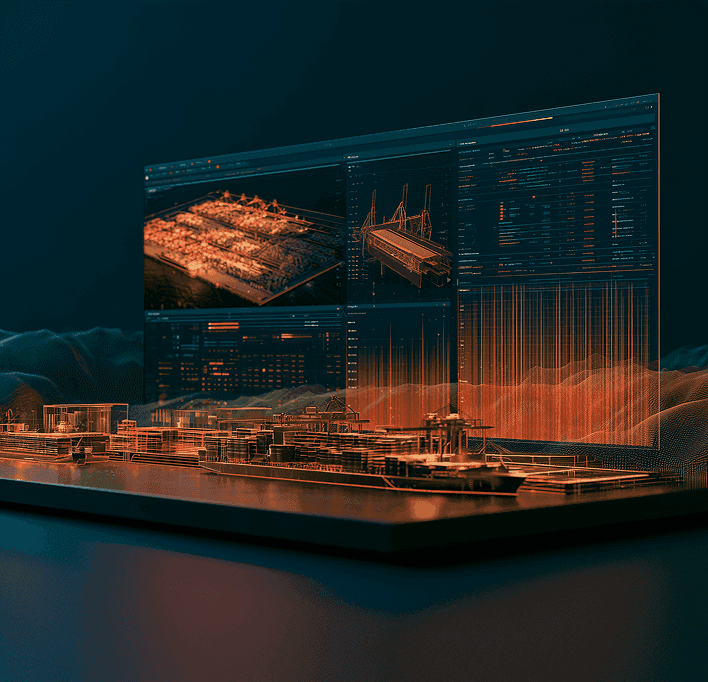
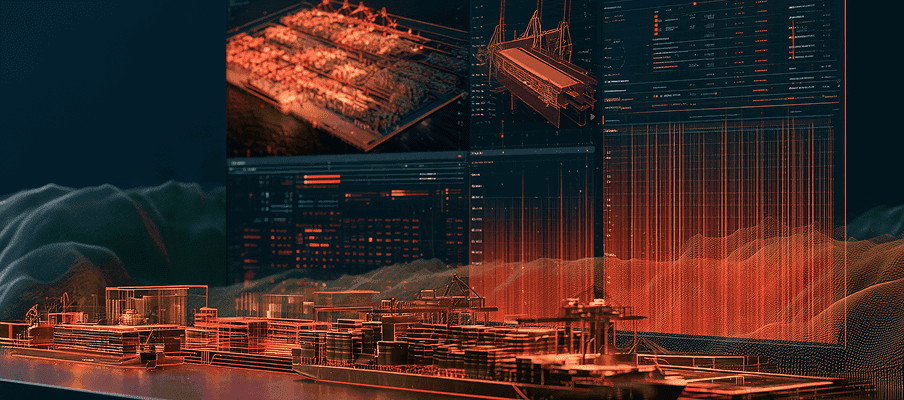
AI Engineering by Grid Dynamics builds its terminal digital twins on NVIDIA Omniverse and integrates with the main terminal operating systems used at container and multimodal terminals.

Terminal operating systems:


Cloud:


AI services:




| Model | ||
|---|---|---|
| Model | Full delivery | Hybrid (dedicated pod / team extension) |
| Best suited for | ||
| Best suited for | Operators who want AI Engineering by Grid Dynamics to own the build, from POC to terminal-wide rollout | Operators with an in-house terminal IT or data team who want to build capability alongside AI Engineering by Grid Dynamics |
| Team composition | ||
| Team composition | Logistics consultants, AI engineers, simulation specialists | Cross-functional agile team, including a project manager and lead engineers, in place within 3 to 4 weeks |
Full delivery suits operators who don't have a large in-house data or simulation team and want one partner accountable for the result. The hybrid model suits operators who want to keep and grow the capability internally, so their own team can maintain and extend the modules after launch.
In both models, scoping happens inside the engagement rather than as a separate paid phase. Stating the budget upfront helps your team decide early whether a programme fits, before time goes into scoping.
A POC takes a minimum of 6 to 9 months, and ROI is expected within 6 to 12 months of full deployment. All durations below are planning estimates, not quotes.
Data and integration audit
Review of TOS, gate, IoT and AIS data, plus a prioritised list of use cases
POC
A working digital twin plus the first planning module running on live data
Production rollout
Modules deployed across terminal operations
Ongoing
Model tuning, new scenarios and additional modules
The audit happens inside the engagement, not as a separate paid phase. It decides which module the POC starts with, based on where your terminal loses the most time.
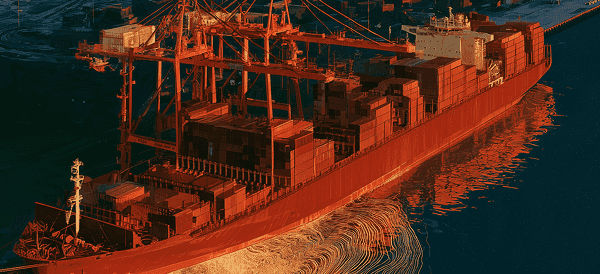
Situation: Cranes sit idle while discharge plans lag behind berth changes.
Approach: AI discharge sequencing with live rescheduling as berth windows move.
Expected outcome: Shorter port stays and steadier crane productivity, with plans that stay valid as the berth schedule changes during the day.
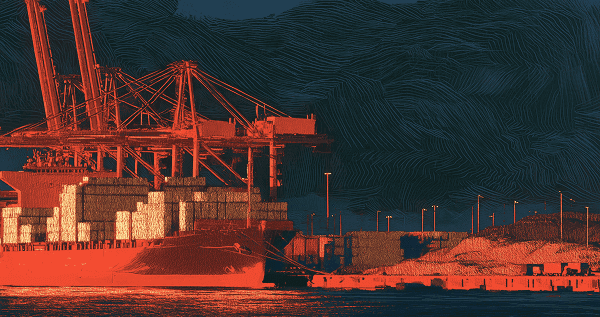
Situation: Rail departures are missed because the yard and the gate run on separate plans.
Approach: Handoff coordination that plans rail, truck and yard work together.
Expected outcome: More reliable intermodal connections, because containers for each departure are staged before the train is due, not searched for once it arrives.
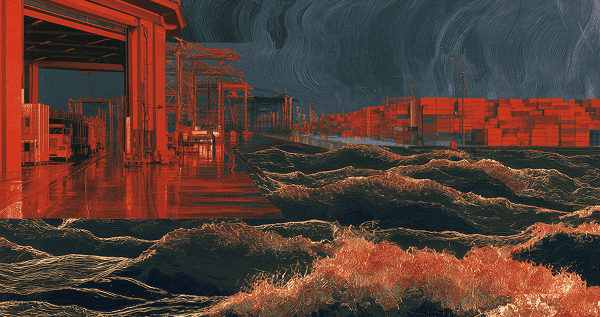
Situation: Planners rebuild plans by hand under time pressure.
Approach: Scenario simulation on the digital twin to test response options in advance.
Expected outcome: Faster response plans that have already been tested, so the team acts on a known plan when the weather turns.
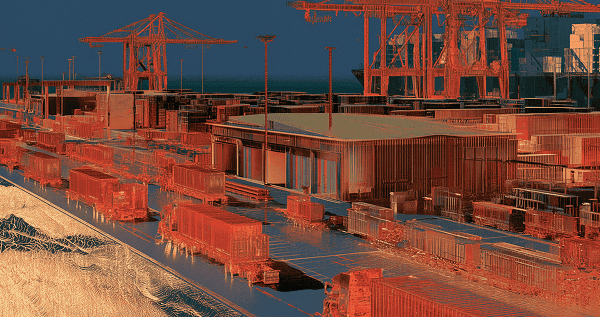
Situation: Rehandles and truck wait times rise as the yard fills.
Approach: Predictive slotting and dynamic block allocation.
Expected outcome: Fewer rehandles and shorter truck turnaround, with yard capacity used more evenly as volumes rise.
AI Engineering by Grid Dynamics combines its own simulation accelerators with experience integrating legacy terminal systems, so operators get a working digital twin within a POC timeline and a single model covering ship, yard and landside.